A Winter Dinner, Planned Around the Menu
Choose wine for a winter dinner by weighing the dish, dominant flavours and serving plan, so the bottle fits the meal without rigid pairing rules.
The common mistake when choosing wine for a winter dinner is reaching for a bold red before deciding what is on the table. A delicate dish can disappear beside it, while a sharp sauce can make the wine taste harsh. Start with the food’s strongest flavour and texture, then choose a bottle with enough freshness or body to sit comfortably alongside them.
What does the main dish need?
Begin with weight and texture, not a rule that red belongs with meat or white with fish. Slow-cooked beef stew is rich and soft; roast chicken can be savoury but much lighter. Ask whether the plate needs freshness, softness or extra body.
Braised beef, lamb or mushroom pie can suit a medium-bodied red with supple fruit rather than an especially forceful one. With roast pork, poultry or a creamy vegetable bake, consider a fuller white or a lighter red, depending on the dish’s seasoning.
The same ingredient can call for different wines in different preparations. Plain roast meat with greens is not the same pairing problem as that meat with a rich, sweet or acidic sauce. For a dish centred on lentils, squash or mushrooms, a red with gentle tannin or a savoury white can echo earthy flavours without making the meal feel heavier.
Which flavour will dominate the plate?
Winter meals often combine sweetness, acidity, salt, smoke and spice. Pick out the most assertive element: cranberry relish, lemon dressing, smoked bacon, chilli or a sticky glaze. Let that flavour, rather than the menu’s headline ingredient, guide your choice.
Citrus, vinegar and sharp fruit sauces usually sit more comfortably beside a wine with lively acidity; a soft, low-acid wine may seem flat. A distinctly sweet glaze can make a very dry wine taste austere. Consider a fruit-forward style, or serve the wine with the less-sweet parts of the meal.
Chilli and pepper can make alcohol seem more pronounced, so a fresher, softer wine may be easier to drink. A gently aromatic white can also suit fragrant spices. If one sauce carries most of the heat or sweetness, make your decision against that flavour rather than trying to match every ingredient separately.
How should the wine fit the evening?
A relaxed supper has different needs from a formal dinner with several courses. For a casual meal, choose a bottle that works with the main dish and remains pleasant on its own. If the meal moves from a light starter to a rich centrepiece, a fresh wine first and a more substantial one with the main course can make a natural progression.
Think about guests’ preferences and how many bottles you want to open. If tastes differ, a versatile red and a crisp white offer a straightforward choice without turning dinner into a tasting exercise. Put water on the table and make both wines easy to reach.
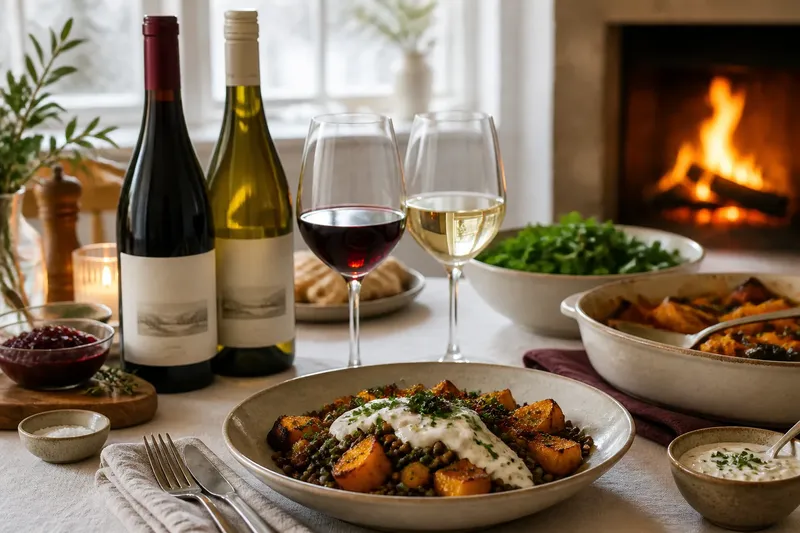
Say you are planning a hypothetical supper of roast squash, lentils and tangy yoghurt sauce. The starting point is earthy food with a bright, acidic finish. First, rule out a heavy red that could overwhelm the sauce; next, compare a light-bodied red with gentle tannin against a dry, lively white. If the guests prefer red, choose the lighter style and serve it slightly cool; the expected result is a refreshing contrast to the sauce with enough savoury character for the lentils. If they favour white, the dry option is the clearer fit, though it will echo the dish’s earthy depth less directly.
What if the menu changes?
Winter menus can shift as ingredients or guest numbers change. Keep the choice flexible, but decide once the main dish and its strongest sauce or side are known. A medium-bodied red, textured white or dry sparkling wine may suit several preparations, though richness, sweetness and spice can still change the best fit.
If several bold flavours share the table, choose a balanced wine rather than one that competes with each of them. A meal with pronounced chilli, sweetness and acidity may call for a softer, fresher bottle; a rich, savoury dish may take a wine with more body. If the menu changes substantially, be willing to switch bottles rather than forcing the original choice to work.
What do people ask about winter dinner wine pairing?
Does red wine always suit a winter roast?
No. Rich gravy may suit red, but poultry with lemon or herbs can be better with a lively white or a lighter red. Choose for the preparation, not the season.
Can one bottle work with the whole meal?
It can if the courses have similar weight and flavour. A balanced, food-friendly style is more adaptable than a very sweet, tannic or forceful wine, but it may be a compromise between courses.
Should red wine be served warm?
Not necessarily. A warm room can make red wine seem heavy, so a short spell somewhere cool may help it taste fresher. Follow any serving advice for the bottle and adjust to the room.
What if guests prefer different styles?
Offer a red and a white if practical, and put water on the table. Guests can choose what they enjoy without needing to agree on a single pairing.
Which checks will help you choose?
Before opening a bottle, use these checks to make a clear decision. Each one points to an alternative if the first option does not fit.
- Main dish: Check whether it is delicate, hearty, creamy or intensely savoury. If it is delicate, choose a lighter wine; if it is hearty, choose one with more body, or switch to a more moderate style if the dish also has subtle flavours.
- Sauce and sides: Check whether the strongest flavour is acidic, sweet, smoky or spicy. If acidity leads, favour lively acidity in the wine; if sweetness or heat dominates, choose a softer, fruitier style, or serve the wine with a milder part of the meal.
- Texture: Check whether the food feels rich or light. If it is rich, look for freshness to balance it; if it is light, avoid a forceful wine, or choose a fuller style only if the seasoning can hold its own.
- Guests: Check whether anyone has a clear preference. If preferences are divided, offer a red and a white; if opening two bottles is not practical, choose a balanced style and let guests know it is a flexible middle ground.
- Serving plan: Check whether the bottle will accompany one course or several. If courses vary greatly, change wines between them; if you want one bottle, choose for the most strongly flavoured course and accept that another course may be a less exact fit.
- Menu changes: Check whether the main dish, sauce or sides have changed since you chose the bottle. If the dominant flavour remains similar, keep the original choice; if it has shifted from mild to spicy, sweet or sharply acidic, reconsider the wine or serve it with a less challenging dish.
For wine for a winter dinner, these checks are a way to make a sensible choice, not a set of rules to defend. A bottle your guests already enjoy with the food is a sound option; keep its serving advice in view and let the finished dish decide whether to pour it with the main course or save it for another moment.