The Aroma Shortcut: Why One Smell Does Not Name a Wine
Wine aroma can suggest fruit, herbs or oak, but one smell cannot name a grape. Learn how to combine scent, taste and texture for clearer notes.
The common mistake in wine tasting is to recognise one familiar smell, name a grape and stop paying attention. That shortcut can steer you towards the wrong bottle or leave you with a tasting note that says more than the glass can support.
A hint of lemon does not settle whether a white is Sauvignon Blanc, and cherry does not identify a red. Treat an aroma as an observation first, then consider it alongside the wine’s texture, taste and other scents.
How should you record a familiar aroma?
Keep the word, but lower its status. Instead of writing, “This is definitely Riesling,” note, “I notice something like lime.” The second version records a sensation without turning it into a claim about the wine’s identity.
Check whether the impression holds when you smell again. A quick sniff may bring one vivid note to the fore; a slower one can reveal other aromas around it. Give the glass a gentle swirl if appropriate, pause, and smell from a comfortable distance.
- Check the first scent: If a clear impression such as apple, blackcurrant, rose or pepper stands out, write it down; if it does not, record that no single aroma is prominent and move on to a broader family.
- Check for another aroma family: If you notice a floral, herbal, earthy or spicy note as well, add it; if not, keep the note to the scent you can actually identify.
- Check the palate: If acidity, sweetness, tannin, body or a changing finish gives useful context, record the feature; if the palate is hard to read, leave it open rather than guessing.
- Check whether a word is an observation or an inference: If it names a scent, record it as an aroma; if it suggests a grape or style, mark it as tentative and consider what other clues support it.
- Check your confidence: If the impression is clear on a second smell, use it in your note; if it fades or changes, describe it as uncertain rather than treating it as a firm clue.
- Check for a distracting smell: If perfume, detergent or food aromas seem to affect the glass, pause and use a clean glass or return later; if the distraction remains, avoid drawing a conclusion from that smell.
That separation makes a note easier to compare later. You can revisit what you sensed without having to defend a grape name assigned too quickly.
Are you tasting blind or reading the label?
In a blind tasting, an aroma can help narrow possibilities, but it cannot identify a wine on its own. Grapes and styles can share fruit or herbal notes, so use scent to form a shortlist and compare it with the wine’s structure and other impressions.
If the bottle is visible, its label can shape what you expect to smell. For a less primed first impression, write down a few words before reading the grape name. The label can then add context without replacing your own observation.
Say you are at a tasting with an unidentified white wine, and the first smell reminds you of green apple. You write “green apple, fresh” before checking the card, then notice the wine has a softer texture than you expected. Your note stays useful, while the difference in texture tells you not to settle on a grape from the aroma alone.
Do the aromas fit the wine’s other clues?
Aroma becomes more informative when it sits alongside the wine’s broader character. Citrus with lively acidity and a light, crisp feel suggests a different general style from citrus in a fuller wine with softer texture. Neither combination proves a grape, but each gives the scent a context.
For red wine, consider fruit character together with tannin and body. Fresh red-fruit aromas in a lighter-bodied wine may point towards different possibilities from darker fruit alongside firmer tannin. These are broad patterns, not rules: growing conditions, ripeness, winemaking and bottle development can all influence what you smell.
Notice whether the wine seems dominated by fresh fruit and flowers, or whether dried fruit, savoury notes or spice are more apparent. These descriptions tell you what you perceive in the glass; they do not, on their own, establish the grape or cellar choices behind it.
Which clues matter in common tasting situations?
Are you choosing a bottle from a menu?
Use an aroma word to describe the style you want, rather than demanding a particular grape. Ask for fresh citrus character or ripe dark fruit, then add whether you prefer a lighter or fuller feel. The person helping you can use both details to suggest a suitable wine.
Are you learning a grape’s usual profile?
Compare several wines made from that grape instead of memorising one aroma as its signature. Look for combinations of scent and structure that recur, while noting differences between bottles. That gives you a flexible picture rather than a rule that fails when a wine departs from expectation.
Are you trying to identify an unfamiliar wine?
Start with broad categories: white or red fruit, floral or herbal, fresh or developed. Then consider acidity, tannin, body and sweetness. If these clues point in different directions, keep the identity open rather than forcing a guess.
Are you describing a wine to someone else?
Choose words another drinker can understand and that you can support from the glass. “Ripe pear with a floral edge” gives a clearer impression than a long string of obscure comparisons. If a descriptor is personal or uncertain, say “I get” or “it reminds me of”.
How can you keep wine aroma notes useful?
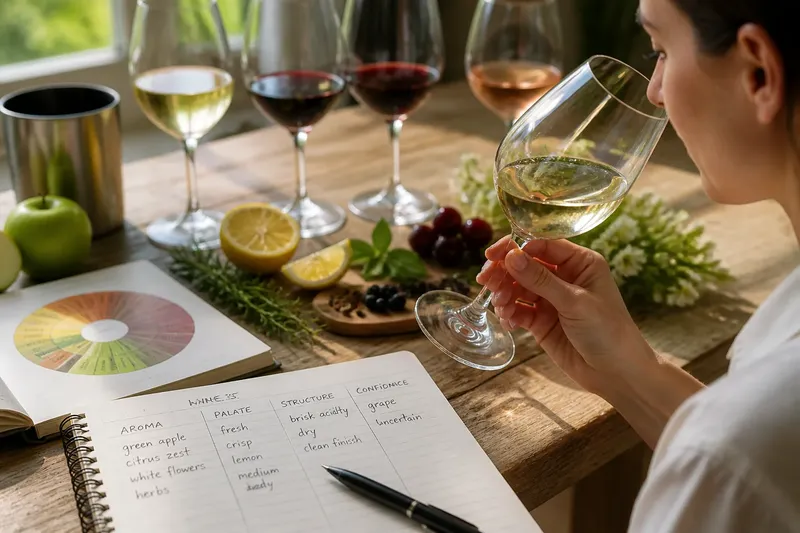
Use a small vocabulary consistently. A wine aroma wheel can help when you are stuck, but treat it as a prompt rather than a scoring sheet. Start with a broad family such as fruit, spice or earth, and add a specific term only when it genuinely fits.
Keep conditions steady when comparing wines. Use clean glasses without lingering detergent or perfume smells, and avoid strong food aromas just before tasting. If a glass seems muted, give it time and revisit it instead of assuming the first impression tells the whole story.
For a compact note, record the clearest aroma, another aroma family, one structural feature and your confidence in any grape guess. “Citrus and herbs; brisk acidity; grape uncertain” captures several useful observations without claiming more than you know.
What can a wine aroma tell you?
Aroma helps you notice character, compare styles and describe what you enjoy. It can point towards citrus, orchard fruit, red berries, herbs, flowers, spice or savoury notes, even when you do not attach a grape name to them.
Similar aromas can occur in different grapes and styles, while wines from the same grape can smell quite different. Ripeness, place, fermentation, ageing and development all contribute to what reaches the glass. A descriptor such as “peach” is a sensory impression, not a verdict about origin.
To identify a wine, move from sensation to interpretation: name what you smell, then check which other clues support or complicate your idea. If the clues remain mixed, a broad family of styles is a more useful answer than a forced variety guess.
Next time you recognise one smell, write it down and take a sip before deciding what it means. Wine aroma is most useful when it helps you notice the wine’s character and make a clearer comparison with the styles you enjoy.