From Skin to Glass: Why Red Wines Draw Colour from Grape Skins
Red wine colour from grape skins depends on contact during fermentation. Learn how to distinguish hue from tannin and read a wine’s texture with more confidence.
The most common mistake is to treat deep red colour as proof that a wine is richer or better made. Red wine colour from grape skins can be vivid without matching the wine’s tannin or weight, so judging by shade alone can lead to misleading tasting notes and expectations.
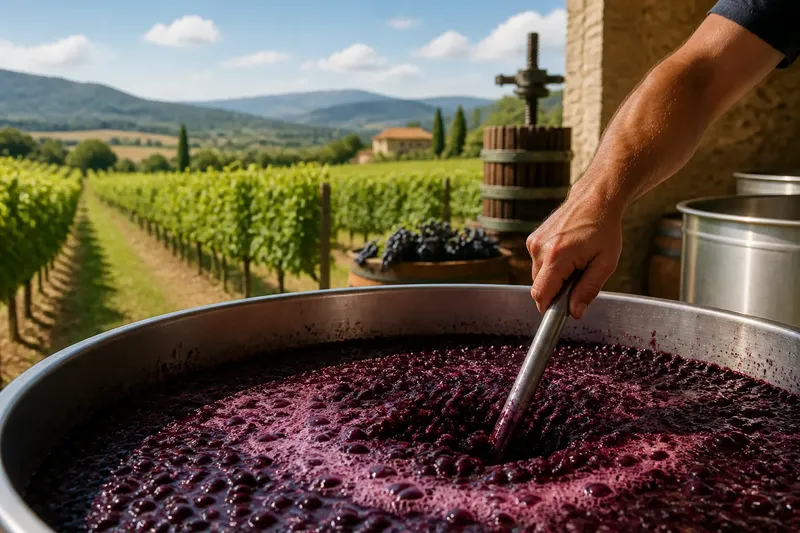
In red-wine making, juice usually ferments with crushed or partly crushed fruit, including skins. The length and conditions of that contact affect what moves into the liquid. Understanding the process helps you separate visible colour from the texture and aroma you notice in the glass.
Why does red wine get its colour from grape skins?
The flesh of most dark-skinned wine grapes has pale juice. Much of the red and purple pigment is in the skin, where compounds called anthocyanins are present. Once grapes are crushed, juice can take up some of these pigments and change from a light ruby to a deeper shade.
Colour extraction begins when juice meets broken skin and can continue while fermenting wine remains in contact with the grape solids. Duration is only one influence: grape variety, fruit condition and cellar handling also matter. Some dark-skinned varieties yield strongly coloured wines, while others can remain comparatively pale.
There are exceptions. Teinturier grapes have coloured flesh as well as coloured skins, so their pulp can contribute pigment. For many familiar red varieties, however, the skin is the main source of colour.
What else comes out of the skins besides colour?
Skins also contain tannins and aroma compounds. Tannin creates a drying or grippy sensation, often noticed around the gums and cheeks. It is not the same as bitterness, acidity or alcohol, although a wine can show several of these qualities at once.
Seeds and stems can contribute tannin too. Stems may also add their own aromas and texture. That is why “more skin contact” does not fully explain a red wine’s structure: fermentation management, stem inclusion and handling of the seeds all affect what the liquid meets.
Skin-derived compounds can influence aroma and flavour. Depending on the grapes and the winemaking choices, a taster might describe dark fruit, spice or herbal character. These are impressions of the wine, not ingredients added to it.
How does skin contact change colour and tannin over time?
Colour can move into juice relatively early, while tannin may continue to extract differently as fermentation proceeds. There is no simple clock for this process. Alcohol develops during fermentation and can affect extraction, while the floating cap of grape skins needs cellar management to maintain contact with the liquid.
A winemaker may pump wine over the cap or push it down into the fermenting liquid. These techniques alter how the wine and solids meet, but their effects depend on the fruit and the way the work is carried out. Gentle handling and more vigorous cap work can produce different textures; neither dictates a single outcome.
Pigment and tannin can also interact during fermentation and maceration. Some colour compounds become more stable through these interactions, while others may change or be lost. The final hue is not simply a record of how long the skins remained in the vat.
Why might a winemaker end skin contact sooner or later?
Timing is a choice about the desired balance, not a universal recipe. A shorter maceration may suit a lighter style with less grip. Longer contact may be considered when the fruit can support more structure, but extra time does not automatically mean better colour, higher quality or greater suitability for ageing.
Winemakers can taste samples and assess colour, aroma and texture before deciding when to press. The decision depends on the condition of the skins and seeds, the intended style and how that fermentation is developing.
Say a winemaker has a batch whose colour already suits the intended style but whose finish feels sharply drying. The starting point is a coloured wine with a firm, drying sensation; the winemaker tastes a sample and chooses to separate the liquid from the skins earlier than first planned. The expected observable result is that extraction from the solids stops sooner, with the trade-off that the finished wine may have less structural grip.
What do pressing and maceration mean in red-wine making?
Maceration is the period when juice or fermenting wine remains in contact with grape solids. Pressing separates the liquid from skins, seeds and any stems present. Depending on the style and cellar approach, pressing can happen before fermentation is complete or afterwards.
Free-run wine is the liquid that drains before pressing. Press wine comes from the remaining solids. These portions can differ in tannin and texture, so a winemaker may keep them separate at first and later decide whether to blend some press wine back in. This gives the producer another way to shape structure without relying on maceration length alone.
Producer descriptions do not always give every detail of skin contact. If a particular method matters to you, check the winery’s own information, since terms and practices vary. Cellar work also depends on the fruit, equipment and procedures in use.
Does darker red wine always taste more tannic?
No. Colour and tannin can both come from grape solids, but they are different compounds and need not extract at the same pace or to the same degree. A wine can look opaque and feel smooth, or appear lighter while leaving a firm, drying sensation.
Grape variety, growing conditions, fruit ripeness, fermentation and pressing choices all contribute to the difference. To assess tannin, notice the texture left on your gums rather than relying on the wine’s shade. For a direct comparison, look at two reds against a white sheet of paper, then taste each and note whether your mouth feels dry or grippy.
Can red wine be made with little or no skin contact?
Yes. A dark-skinned grape can be pressed soon after crushing, before much pigment moves into the juice, producing a pale wine. Rosé commonly involves limited skin contact or another controlled approach to colour, while red wine generally ferments with skins long enough to develop its characteristic hue and structure.
Some red wines are made with whole bunches or whole berries rather than fully crushed fruit. These methods change how fermentation develops and how juice meets the skins, but the broad principle remains: pigment transfers from grape material into the liquid. The producer’s approach reflects the intended style and the fruit.
Which questions help explain skin contact on a wine label?
Does a longer maceration always make a better red wine?
No. More time can extract additional material, but the result may be too firm or drying for the intended style. The relevant question is whether the wine’s colour and texture suit the fruit and the maker’s aim.
Is colour extraction finished when fermentation ends?
Not necessarily. A wine may remain with the skins after active fermentation, and the maker may continue maceration before pressing. Timing depends on how the wine is developing, not on one rule for every red.
Why do some red wines look pale despite tasting structured?
Pigment and tannin are not interchangeable, and grape varieties differ in both. A pale-looking wine can still have firm, drying texture if its tannin profile supports it.
Can the colour tell me how the wine was made?
Colour can offer a clue, but not a full account of the process. Variety, fruit condition and cellar decisions all affect the final shade, so colour alone cannot reveal the exact timing or handling of skin contact.
How can you notice skin-derived structure while tasting?
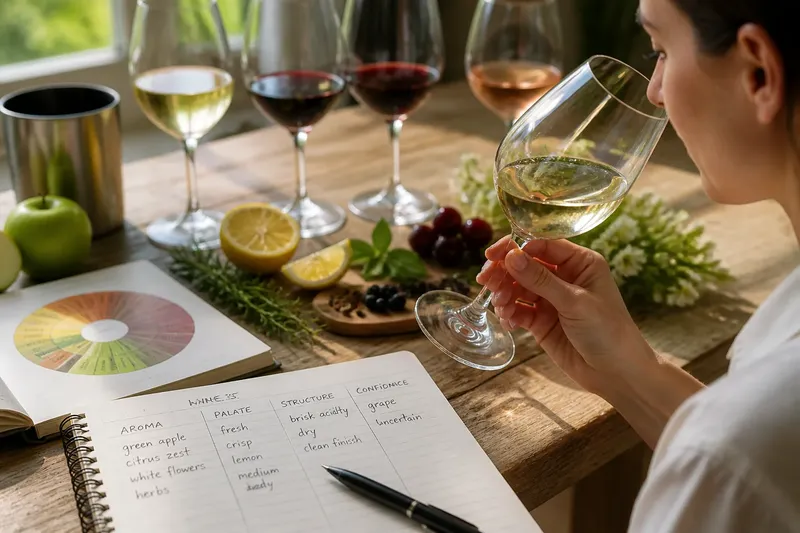
Pour a little red wine into a clear glass and look at its rim against a white tablecloth or sheet of paper. Then take a sip and notice where the sensation appears. Acidity tends to make the mouth water, while tannin tends to leave the gums and cheeks feeling dry or grippy. Keep those observations separate from colour and fruit flavour.
- If the wine looks deep against the white paper but feels smooth on your gums, note that its colour is not matched by strong drying tannin; if you want to assess structure, focus on the mouthfeel rather than the shade.
- If the wine looks pale and leaves your gums dry, record colour and tannin separately; if choosing between bottles, do not rule it out as light-bodied on colour alone.
- If your mouth waters after a sip, treat that as a sign of acidity rather than tannin; if the sensation is unclear, taste again and pay attention to whether the gums feel dry.
- If the drying sensation is strongest around your gums and cheeks, describe the wine as grippy or tannic; if the main impression is sharpness and salivation, describe the acidity instead.
- If fruit flavour is prominent but the finish does not dry your mouth, keep the fruit note separate from structure; if writing a tasting note, describe both rather than using one as evidence for the other.
- If two wines differ in shade but have a similar drying feel, record the texture as similar and the colour as different; if their textures also differ, note that separately rather than assuming shade explains it.
Imagine you have two open bottles and a white sheet of paper. The first wine looks dark ruby and leaves your mouth feeling smooth; the second looks lighter but dries your gums after a sip. You write down “deep colour, soft tannin” for the first and “pale colour, firm tannin” for the second. The result is a comparison that separates visible hue from mouthfeel instead of treating one as a proxy for the other.
This distinction can help when choosing a red for a meal or comparing bottles. Descriptions such as supple, smooth, grippy and tannic can guide you, but they remain tasting language rather than fixed measures. The producer’s style and grape variety still shape what you experience.
Red wine colour from grape skins is one visible part of a broader exchange: juice takes pigment, tannin and aroma compounds from the fruit, and the winemaker chooses when to separate them. When a wine seems unusually dark or unexpectedly grippy, consider those qualities separately. That small habit makes tasting notes more precise and gives you a clearer basis for choosing the next glass.